
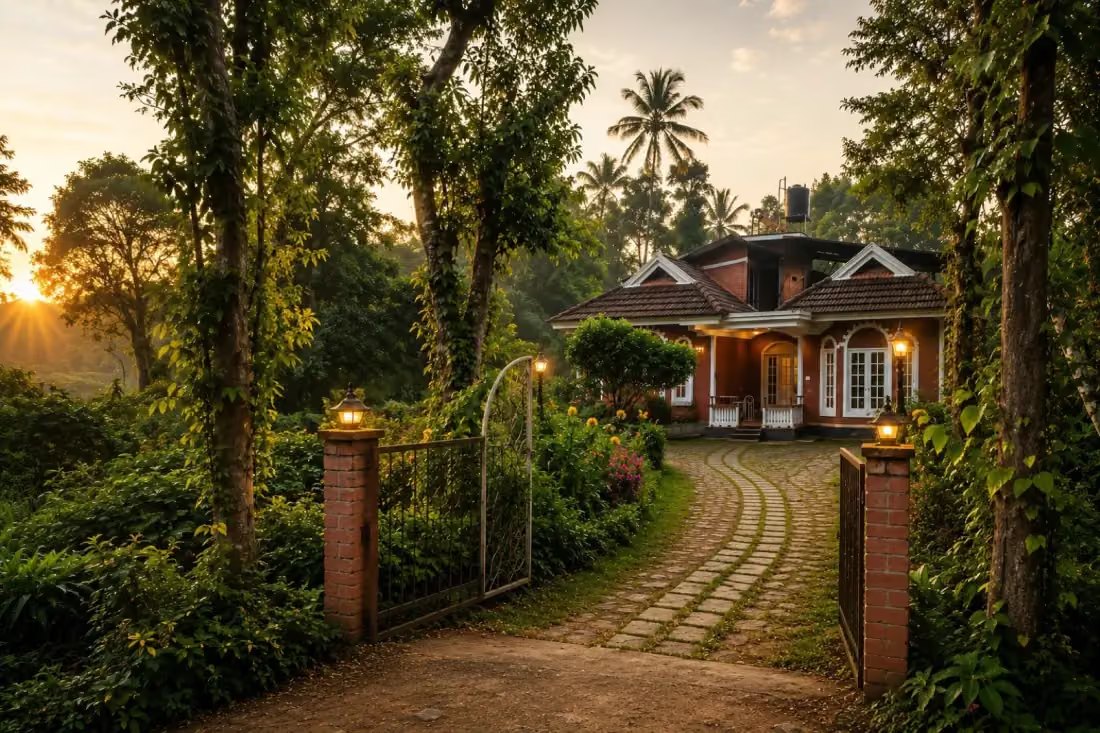
There isn't really a bad time to visit Wayanad. It changes character with every season, and what's "best" depends on the kind of trip you want.
The Short Answer
If it's your first visit and you want the easiest version, come between October and February. If you've been before, or you'd rather have the place to yourself, look at March to May or the edges of the monsoon.
The rest of this is the detail behind that, because "best time" hides a lot of trade-offs that only matter once you know what you're planning to do.
Wayanad Has Four Seasons, Not Two
Most guides split the year into "monsoon" and "not monsoon". Locally it's understood as four: cold weather from December to February, hot weather from March to May, the southwest monsoon from June to September, and the northeast monsoon over October and November.
That fourth one is the season visitors don't plan for. October and November are not simply "after the rain": there's a second, gentler monsoon in there. It rarely wrecks a trip, but it's why an October afternoon can turn on you.
Some Numbers Worth Having
Wayanad is high country. The district runs roughly 700 to 2,100 metres above sea level, which is the whole reason it stays cool while the coast below doesn't.
Rainfall is substantial and very unevenly spread. Averages around Wayanad come in near 2,500 mm a year, and July alone can bring in the region of 500 mm across roughly eighteen wet days. The wettest belt (Lakkidi, Vythiri, Meppadi, on the western edge where the hills first meet the monsoon) takes 3,000 to 4,000 mm. Lakkidi gets called the Cherrapunji of Kerala for a reason.
Temperatures are milder than most people expect of Kerala. Around Ambalavayal the mean maximum and minimum sit near 29°C and 18°C. Humidity is the other half of the story: through the southwest monsoon it can reach 95 per cent, which is what makes a 26°C July day feel the way it does.
October to February
This is the popular window and it earns it. Skies clear, mornings are properly cold by Kerala standards, and the viewpoints actually show you something, which is not guaranteed the rest of the year.
It's also when everything is running. Safaris at Muthanga are operating, trekking permits are being issued, and the sites that shut in heavy rain are open. If your trip has a list on it, this is when the list works.
The cost is company. December and January in particular are busy, and Edakkal's daily visitor cap can be reached before the afternoon. Book rooms early and start your days early.
A small thing worth knowing: this is also the coffee harvest. From December through February the plantations are working, and it's the most interesting stretch of the year to walk through one. More on that in our guide to the coffee and spice trails.
March to May
Days get warm and the crowds thin out. Mornings and evenings stay comfortable, and the trails and viewpoints are noticeably quieter than they were in January.
Two things people don't expect. First, this is often the best window for wildlife: water is scarce, so animals concentrate around what's left of it, and the undergrowth has thinned. Second, the pre-monsoon showers set off the coffee blossom, which is short, unpredictable and worth catching if the timing lands.
What you give up is the postcard version. By April the hills are dry and dusty rather than green, and the waterfalls are a fraction of what the photographs show.
June to September
The hills turn a green that's hard to describe without sounding like an advertisement, and the waterfalls run properly. It's our own favourite stretch of the year, honestly.
It also asks something of you. Safaris at Muthanga and Tholpetty are commonly suspended through these months. Trekking permits get withheld. Roads are slower and some routes flood. Leeches are a genuine feature of any walk in wet forest, not a joke, so carry salt and wear long socks.
And the serious point. The 2024 landslides in Meppadi panchayat, which struck Mundakkai, Chooralmala, Punjirimattom and Vellarimala, followed more than 370 mm of rain in twenty-four hours and killed hundreds of people. Heavy rain on these slopes is a real hazard, not just an inconvenience. If you're here in monsoon, take local advisories seriously, don't push into hill roads in heavy rain, and be willing to change the plan.
Come in monsoon for the monsoon: for the sound of it, from indoors, with coffee. Not for a checklist of sights.
When It Gets Busy
Rooms across Wayanad go early around Christmas and New Year, Onam, and long weekends when Bangalore drives down. If your dates are fixed to any of those, book well ahead, including us.
If your dates are flexible, midweek in any season is quieter than the weekend either side of it, often by more than you'd think.
Picking, If You Have to Pick
- •First visit, want everything to work: November to February.
- •Here for wildlife: March to May, uncomfortable but productive.
- •Here for the plantations: December to February for harvest, or gamble on the blossom in March or April.
- •Here for waterfalls and green: late monsoon into September, with a flexible plan.
- •Here to work remotely and not much else: almost any month. The rain doesn't reach the Wi-Fi.
Tell Us What You're After
Send us your rough dates and what you'd like the trip to be, and we'll tell you honestly what's likely to be open and what isn't. If a month won't give you what you came for, we'd rather say so before you book than after.